The Oracle or Truth-Teller

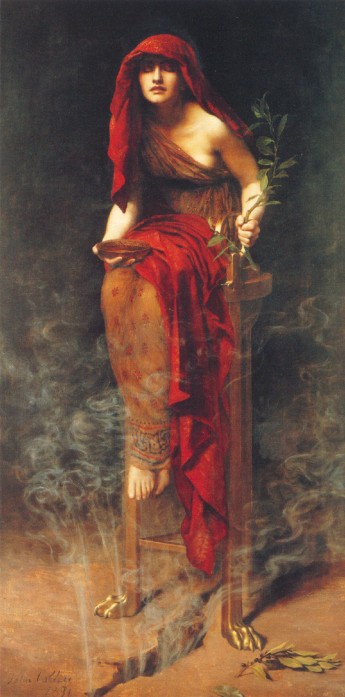
It may be in response to my college days when literature classes presented stories with the “unreliable narrator,” but I like to have at least one character in my writing who is the Oracle or Truth-Teller.  I feel this is important as most of my writing is in the mystery/suspense genre.  There is so much in the story that is hidden and needs to be revealed.  There is so much that the protagonist doesn’t know.  There is so much that the reader must decipher, to learn what is truth and what is misdirection.

So, I put Oracle or Truth-Teller characters in the stories.  Such a character is one who always tells the truth – much like that old riddle about the two guards at the two doors.  One always tells a lie; one always tells the truth.  Please note that the character isn’t always aware that he or she is the truth-teller.  The character is in place more for the benefit of the reader.  It is my hope that as the reader reaches the end of the story and the solution or truth or answer is revealed, the reader will say, “Oh, yes.  I should have known that.  Character X said so.”

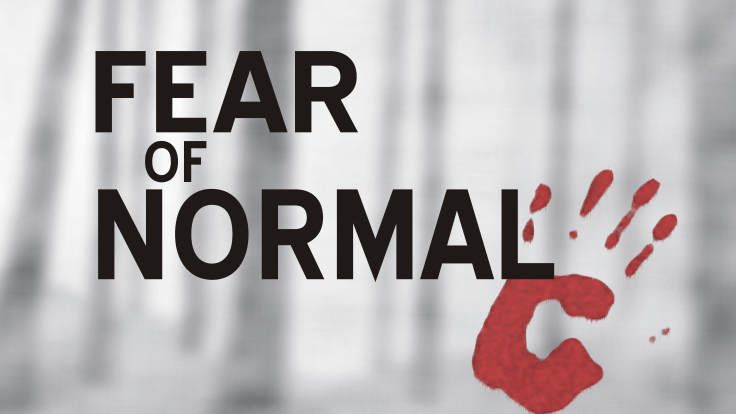
In Fear of Normal the truth-teller is Sydney.  In Absentia it is both Doneta and Fletcher (along with a few other lesser characters).  In A Voice Heard in Ramah it is Bernadette.  These characters either deliberately, knowingly reveal the reality and the truth, or unknowingly identify what is going on and identify some of the symbolism and theme.

That Said

I have an issue with “dialogue tags,” an issue which started many years ago.  I was listening to a book being read on a radio program – and granted, it was a children’s book – but it was so clear as the reader went through it – “Hello,” he said.  “Hello,” she said.  “It’s a nice day,” he said.  “Yes,” she said.  And on and on.  The word “said” became like a drumbeat in my head and was truly annoying.

So, I work very hard to avoid using the word “said” as a dialogue tag.  The quotation marks should be an indication to the reader that something was said.  Writers are missing out on an opportunity to provide action, characterization, emotion, suspense, and so on by using the word “said.”  Instead. I like to present information.

“I don’t know what to do today,” Allen ran his hand through his sandy hair.

“You could go to the beach,” Betty offered a coy smile.

Rather than waste words with “said” I present description or action or some indication of character or emotion.

And the same issue applies with the word “asked.”  The question mark at the end of the quote is an indication that a question is being asked.  You don’t need to say it.

“What?” he asked.

How about moving the story or the character forward instead?

“What do you think you’re doing?” Bruce leaned over the young woman, his lips twisted in a snarl.

In a similar vein I strive to remove all the unnecessary “thats” in my writing.

He knew that she was going home.  She knew that he was angry about it.  They both knew that they had to cope.

Rather – He knew she was going home.  She knew he was angry about it.  They both knew they had to cope.

Fear Inspirations

As I spent time trying to decide what type of story I wanted to write about a small town, I heard an interview on NPR’s “Fresh Air,” with Terry Gross.  The woman being interviewed talked about how she liked to lie on the ground naked.  She said it helped her draw energy from the earth.  I decided that would make a great character in the book, so I ended up with Melody Sharp.

About the same time I drove to work the same way every day (as most people do, I am sure), and every day I passed a huddle of students waiting for the bus.  There was always a girl – maybe sixteen or seventeen – who stood off by herself, away from the group.  She always stood with her back to the road.  She seemed attractive – at least from the back – but she never turned to face the street as I drove by – NEVER.  From that I developed Sydney Sharp.

The name Winters Macklin is from an obituary I came across in 2011.  I altered the name slightly so as not to offend anyone.

I still struggled with the book concepts for a long time until March 21, 2012.  I had a dream and in that dream I saw the murder of Miss Holly, saw the bloody hand print, the classroom left to decay, and the “clean” classroom.  The dream centered around the school being haunted.  The next day I was ready to start writing the book.

The opening sequence of Simon LaFever driving is based on an actual experience I felt one night when driving home on the interstate when I was very tired.

Graphic1

The Smokies

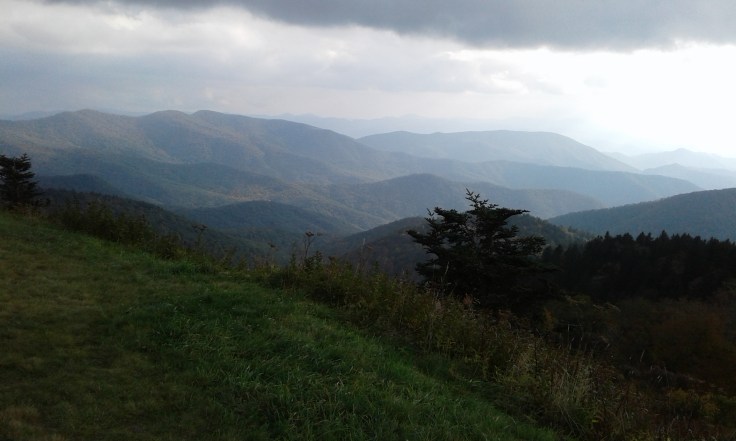
The Smokey Mountains (or Smokies or Smoky Mountains) are a big influence in my writing.  Fear of Normal takes place among the Smokies, and the sequels – Fear of Home, Fear of Family – will take place in the foothills of the mountains.  It is also a primary setting for my current work – A Feast Before Winter.

I think part of the influence is that there seems to be something mystical and supernatural about those mountains.  Not quite as majestic as the Rockies or the Alps, they hold a certain quality that draws me to them time after time (we vacation in the Smokies almost every year).  I feel a sense of connectivity to a long distant past, the heartbeat of the earth itself one could say.  Without leaning too far into the mystical realm and thinking, there is a unique spirit to them, a quality not fully grasped.  They are a beautiful enigma to me, something inexplicable, and something which inspires me.

Although not all my works are set in the Smokies I have been inspired to write while visiting the mountains.  For that alone I value them, but of course my love of the mountains includes their beauty, and the quiet calm they bring to me.

Mountains 1

Themes

I like to add what I call a thematic overlay for my stories.  I believe for the story – short story, novel, etc. – to be interesting and well-written there needs to be more than just the action involved.  Simply writing a story – Joe does this, Joe does that – there should be something to give guidance and add interest.

In Fear of Normal the protagonist, Winters Macklin, is a Christ figure.  Throughout the story there are references to this image.  I also play with the good vs. evil concept, white and black, but twisting them to be the opposite.  I also bring in the theme of an inability to escape, a concept of being trapped, with country roads that really don’t go anywhere and double back to the town, characters unable to depart from the town.  There is also the concept of local knowledge which excludes outsiders, something I have become familiar with after leaving my hometown of about 60,000 residents and spending the past 15 years in small towns of 400 residents, 1,000, and 1,400.

For A Voice Heard in Ramah, the protagonist, Alliana Terry, represents fertility.  Throughout the story she is involved with water (rain, streams, pools, rivers) a symbol of new life.  She decorates her office with iconic images of fertility, fertility gods and so on, and of course, her work involves pregnancies and birth.  Toward the end of the book her journey becomes a descent into hell guided by the skeletal Charon, blocked by Cerberus, all represented by lesser characters in the book.

As I work on a future novel – Fear of Home – a continuation of the Winters Macklin/Sydney Sharp narrative, I am making Sydney part of the “weird sisters” from MacBeth.

dark room

Common Man

My writing, for the most part, consists of heroes and main characters who are average people.  I do not have super-human protagonists or exceptional and unusual characters.  I like to focus on the average person, the common man, with all of his or her faults and flaws and inabilities.  Yet, with all the normalcy of being a person the characters are able to overcome, to solve mysteries, to defeat enemies, to resolve issues.

The Beginning

One of my earliest memories is the night when my mother was tucking me into bed and I told her the idea I had for a novel I wanted to write.  I must have been about 5 or 6 years old, but even then I had the desire to write.

As I got older I was always interested in creating stories.  I created my own cartoons, my own comic books, and certainly acted out my ideas in play.  One childhood friend told his mother that he liked playing with me because I “always had the best ideas.”

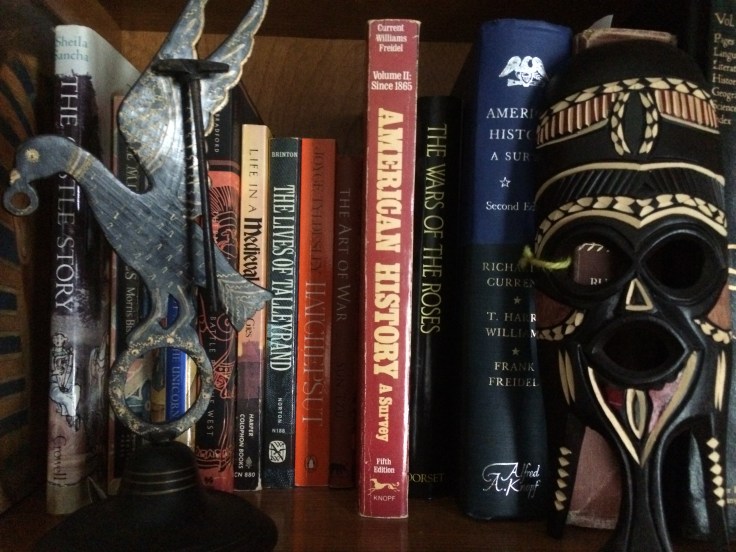
By the time I reached high school and college my ability to write was so limited because of the requirements of life – work, family, social obligations, schooling, and so on.  I also was so intimidated by the concept of writing a novel that I intended to focus my work on short stories only.  I recall that Jaws was the first novel I read, and it impressed me with how the side stories, the characters’ backgrounds and nuances were presented.  It opened me up to the possibility of actually writing novels.

Bookshelf

It really wasn’t until my late 20s that I tackled the novel, starting with what was intended to be a fantasy trilogy (ala Tolkien).  I am not at all pleased with that first effort and intend to totally revise the work some day.

Eventually I wrote my first novel – Gabriel – followed by my second – God’s Wife.  These two collected dust while I began with Fear of Normal.  I was so inspired by the ideas that the writing went quickly, but the ideas had taken nearly 20 years to ferment and gel in my head.

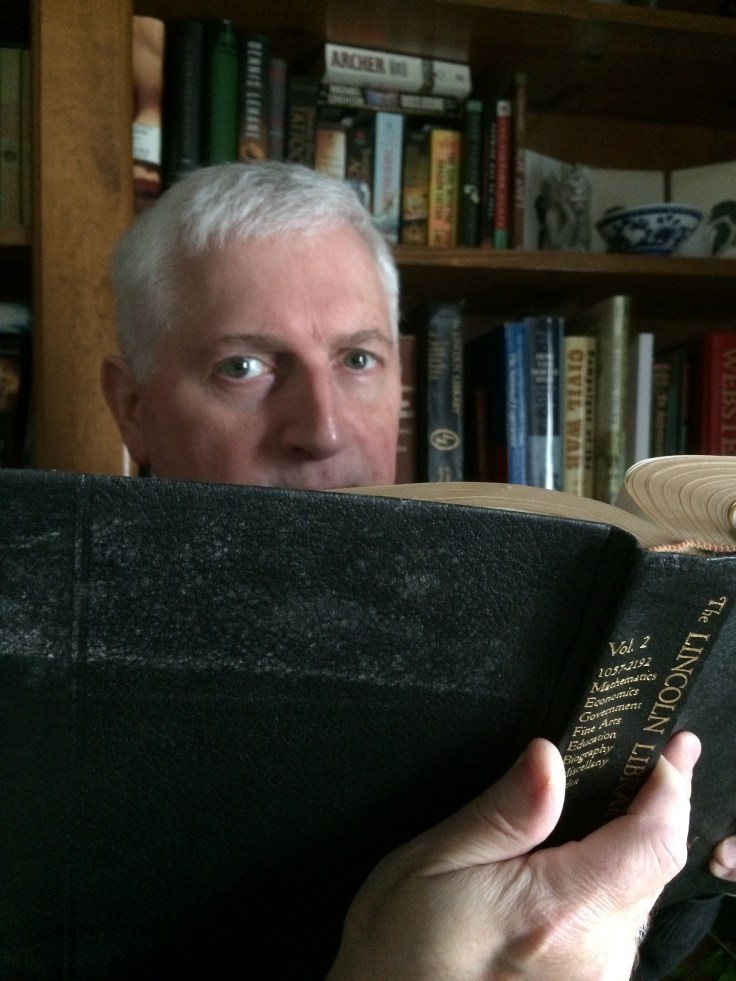
Lohring reads


Blog at WordPress.com.

Up ↑